Skip to content

Clinical data platformAll data. One foundation.

Make your hospital AI-ready.

Firemetrics brings EHR, lab, radiology and imaging data into one unified, FHIR-native data foundation. Clinicians, controlling, researchers, and IT query the data and get answers in seconds, not days. Built based on the needs and in cooperation with hospitals. On-premise, in any cloud or hybrid.

Talk to our team
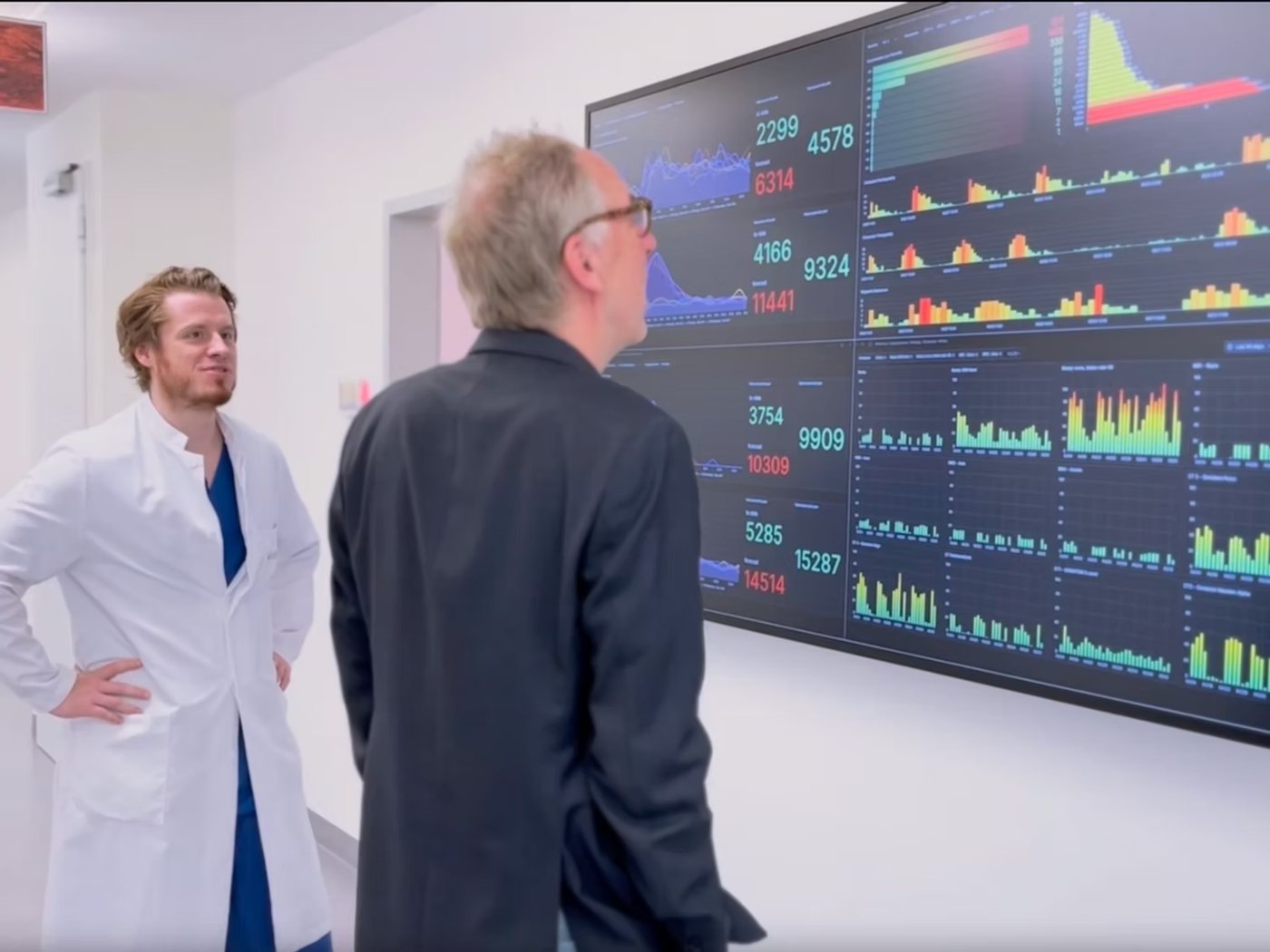
A physician and a colleague review a live Firemetrics dashboard on a wall screen in a hospital corridor
Live
40+

hospitals run their clinical data on Firemetrics

as of 2026

Why AI projects stall

The problem isn't the AI. It's the data.

Hospitals are offered new AI applications every week. Most of these projects stall at the same step: each new system needs its own interfaces, data mappings and clean-up.

Firemetrics does this work once. Your data is brought together in one foundation, and every new application or AI tool connects to it through standard interfaces. Each new system is therefore cheaper to introduce and goes live faster.

The more applications you add, the bigger the saving. Without a shared foundation, 10 source systems and 5 applications can require up to 50 separate interfaces. With Firemetrics, they only need a fraction of it.

Integration effort grows multiplied without a shared foundation

Schematic
Integration effortMore applications and AI tools →
  • Point to point: every new tool needs its own interfaces
  • With Firemetrics: each new tool connects once
  • Your saving grows with every tool

What matters is the marginal cost: what does the next application cost, and the one after?

How Firemetrics makes you AI-ready

Your FHIR-native Clinical Data Repository. Built for real-time decision making.

All hospital data in one foundation. Connect your own tools to it, work with ours, or both.

  1. Layer 3

    Tools for daily work

    Ready-to-use applications, configured per department.

    • Studio
    • FLAME local AI
    • Real-time dashboards
    • Patient viewer
  2. Layer 2

    Open access for any app and AI

    Standard interfaces. New software no longer needs its own data project.

    • SQL
    • FHIR API
    • SMART on FHIR
    • MCP server
  3. Layer 1

    One data foundation

    Every source in one relational, transactional FHIR repository. Your IT queries it with SQL.

    • Relational FHIR Storage
    • FHIR Server
    • DICOM Receiver
    • Terminology Services
    • Roles, permissions, audit logging

Your source systems stay

  • EHR
  • LIS
  • RIS
  • PACS
  • ERP
  • Files and CSV

Your data stays yours. No lock-in.

Everything is stored in open standards and can be accessed at any time with plain SQL or the FHIR API. Your data is never held hostage, not even if you change vendors.

Studio · Ask and dashboards

Ask in plain English. Pin the answer to a live dashboard.

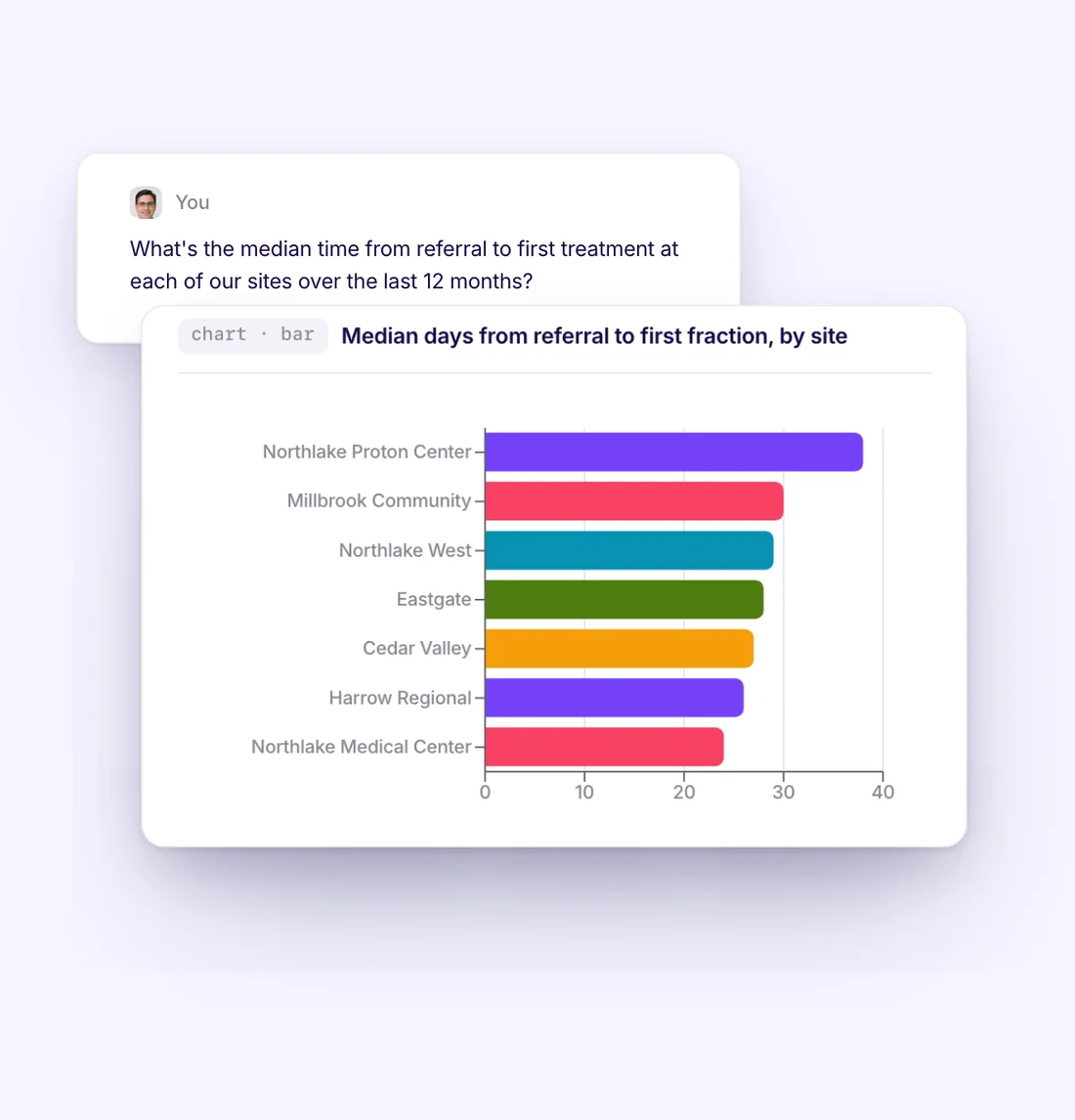
Ask Studio a question in plain English, and it answers using data from all your connected systems. You get the numbers, a chart and an explanation of how they were calculated. Any answer can be pinned as a live dashboard panel and shared with the right people, for example the medical director or the revenue cycle team.

1

Ask a question. See exactly how the answer was built.

Studio answers a question about median time from referral to first treatment by site with a bar chart
2

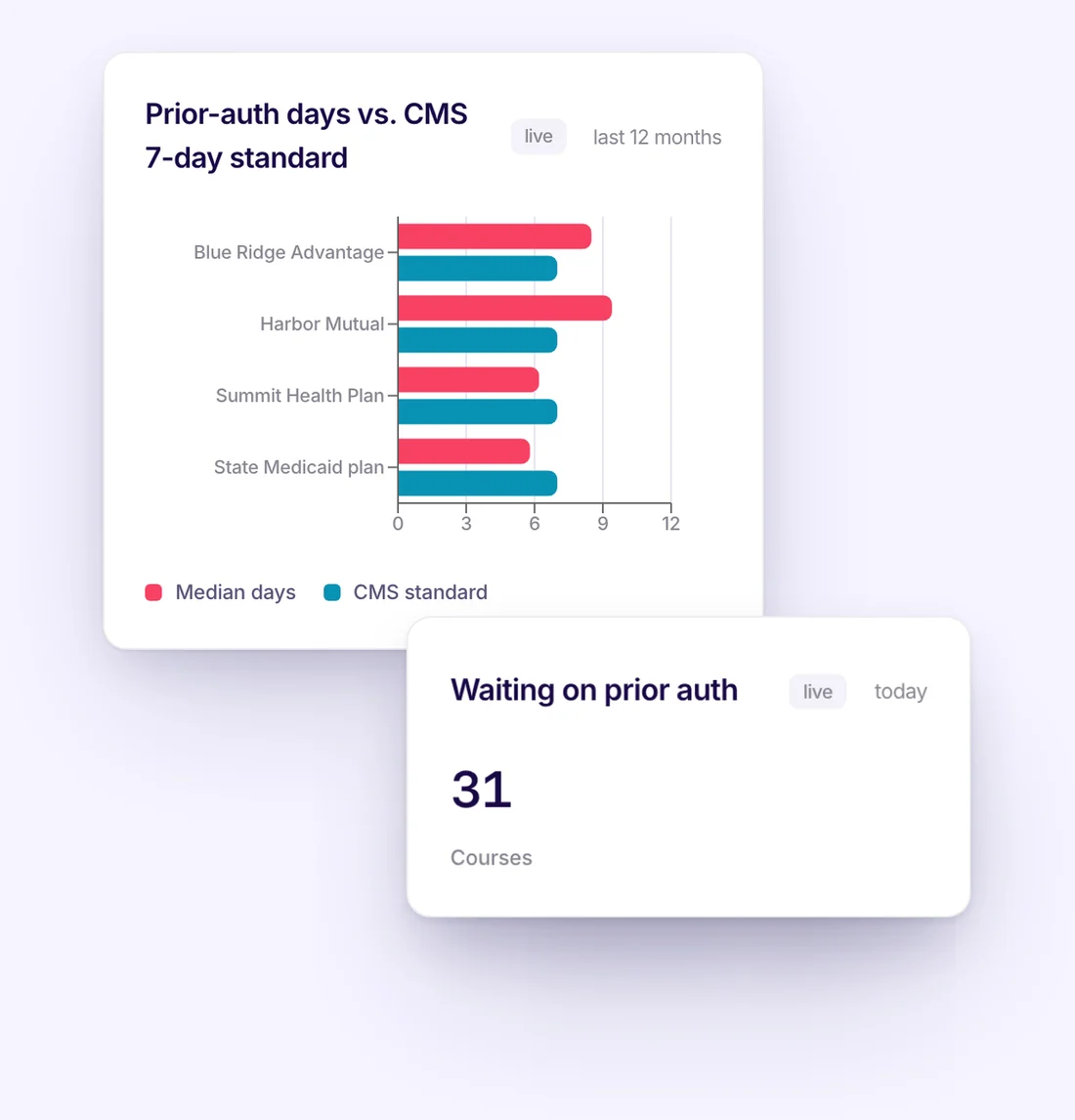
Dashboards. Your saved answers become live panels, all built on the same data. Each dashboard is shared only with the people you choose.

Studio dashboard panel: prior-authorization days by payer against the CMS 7-day standard, and 31 courses waiting

A FEW EXAMPLES

How hospitals use Firemetrics

Release monitor

25units freed
  • Johnson · OR unitA+ · 2
  • Anderson · CCU0− · 4
  • Williams · PICU-20+ · 1

Transfusion medicine

Blood products management

A real-time dashboard automatically identifies blood products reserved for discharged, transferred or deceased patients, making units available again faster.

✓ Peer-reviewed · published in Transfusion Medicine (2025)

A dashboard that saves lives
Case mix · LOS · patient flow

Controlling

Medical controlling

Critical data processed in real time from the EHR, delivered in clear dashboards for controlling staff and lead physicians. No more data-warehouse delays or retrospective Excel sheets.

Optimize length of stay & patient flow

Cohort overview

3,949patients in one cohort
  • Stage I–II · immunotherapy
  • Stage III · targeted therapy
  • Stage IV · trials

Oncology

Melanoma cohort analysis

Demographics, diagnosis codes, histology, genetic markers, surgeries and prior therapies, unified for skin cancer center certification and economic planning.

3,949 patients in one view

Examinations per modality

  • CR1482
  • CT1380
  • MR255
  • NM107
  • US68

Radiology

Modality insights

Live examinations per scanner, peak-time analysis and real-time time-to-report for every sub-area, enabling smarter staff scheduling.

Real-time scanner utilization

LLM field extraction

Gradient: severe ✓AFib: persistent ✓EF value: 60% ✓85% time saved

Cardiology

TAVI quality documentation

LLM-assisted extraction of 48 clinical fields from 5 document types for mandatory quality reporting, with an OCR pipeline for older documents.

85% time saved · 3–4 min vs. 20 min per patient

Payer audit risk prediction

60.2audit risk
Multi-label risk profile

AI prediction

Claim audit risk

A model flags inpatient stays at high risk of a payer audit or DRG downgrade while the patient is still admitted, with the likely reasons, so CDI and coding teams can fix documentation before the claim is submitted.

Prevent retrospective denials and clawbacks

What we do

One platform for every department's data, and a team that stays with you

  • Every source system in the hospital lands in one unified FHIR-native repository, which can be queried directly with SQL.
  • Any application or AI tool you approve can access the data it is authorized to use, through the standard FHIR API, as a SMART on FHIR app or, for AI agents, through MCP.
  • Firemetrics' own tools already run on this foundation every day: Studio, FLAME, real-time dashboards and the patient viewer.